
“Today, poverty prevails as the gravest human rights challenge in the world. Combating poverty, deprivation and exclusion is not a matter of charity, and it does not depend on how rich a country is. By tackling poverty as a matter of human rights obligation, the world will have a better chance at abolishing this scourge in our lifetime… Poverty eradication is an achievable goal.”
UN High Commissioner for Human Rights, Louise Arbour, 10 December 2006
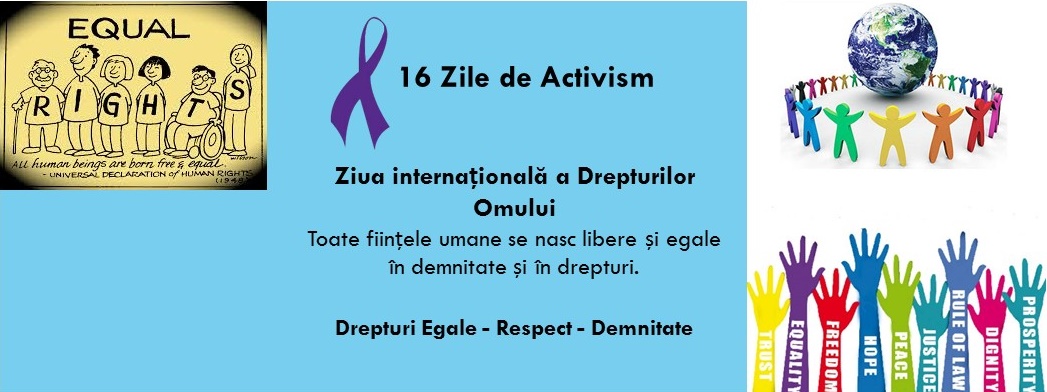
The Human Rights Day is observed by the international community every year on 10 December.
The Human Rights Day, the day the United Nations General Assembly adopted the Universal Declaration of Human Rights in 1948.
To honor the United Nations General Assembly’s adoption and proclamation, on 10 December 1948, of the Universal Declaration of Human Rights (UDHR), the first global enunciation of human rights and one of the first major achievements of the new United Nations. The formal establishment of Human Rights Day occurred during the 317th Plenary Meeting of the General Assembly on December 4, 1950, when the General Assembly declared the 423(V) resolution, inviting all member states and any other interested organizations to celebrate the day as they saw fit.
The day is normally marked both by high-level political conferences and meetings and by cultural events and exhibitions dealing with human rights issues. In addition, the five-yearly United Nations Prize in the Field of Human Rights and Nobel Peace Prize are awarded traditionally on 10 December. In 2013, the winners of the United Nations Prize in the Field of Human Rights were: Biram Dah Abeid, a former slave that fights for eradicating slavery in Mauritania; Hiljmnijeta Apuk, from Kosovo; Liisa Kauppinen, president of the World Federation of the Deaf; Khadija Ryadi, former president of the Morocco Association for Human Rights; The Supreme Court of Mexico and Malala Yousafzai, Pakistani activist for female education and the youngest-ever Nobel Prize laureate (2014).
Many governmental and non-governmental organizations active in the human rights field also schedule special events to commemorate the day.
When the General Assembly adopted the Declaration, with 48 states in favor and eight abstentions, it was proclaimed as a “common standard of achievement for all peoples and all nations”, towards which individuals and societies should “strive by progressive measures, national and international, to secure their universal and effective recognition and observance”.
The 60th anniversary of the Universal Declaration of Human Rights occurred on December 10, 2008, and the UN Secretary-General launched a year-long campaign leading up to this anniversary. Because the UDHR holds the world record as the most translated document (except for the Bible), organizations around the globe used the year to focus on helping people everywhere learn about their rights.
no replies