
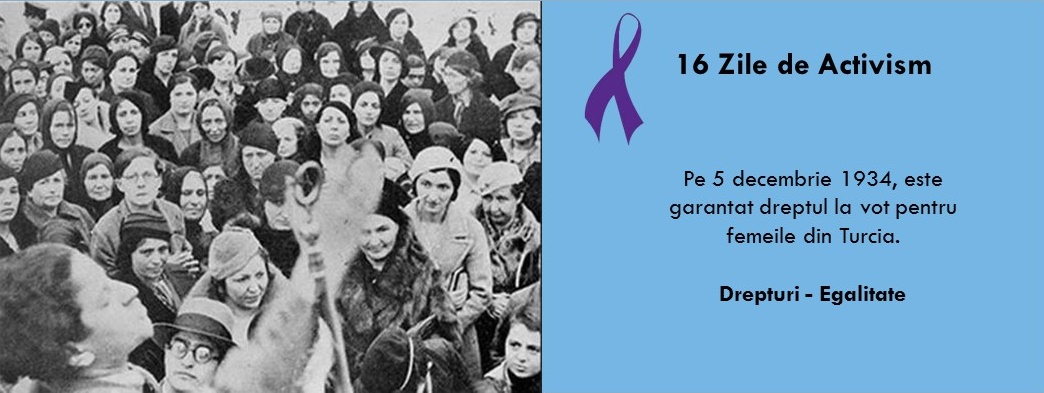
The women’s right to vote has been achieved with great efforts at various times in history all over the world. Starting with the late 19th century, limited voting rights were gained by women in Finland, Iceland, Sweden and in some western U.S. states.
In many countries, women’s suffrage was granted before universal suffrage, so women and men from certain classes or races were still unable to vote. Some countries granted it to both sexes at the same time.
The first women’s suffrage was granted in Corsica in 1755 and lasted until 1769.
Women’s suffrage (with the same property qualifications as for men) was next granted in New Jersey in 1776 and that because in the Constitution the word “inhabitants” was used instead of “men” but was rescinded in 1807.
The Pitcairn Islands granted women a restricted suffrage in 1838. Various other countries and states granted women restricted suffrage in the late half of the nineteenth century, starting with South Australia in 1861.
In 1881 the Isle of Man (a Crown Dependency, not part of the UK) enacted the Manx Election Act which gave women property owners the right to vote in the country’s Parliament, Tynwald.
The first unrestricted women’s suffrage in a major country was granted in New Zealand in 1893. Though it didn’t achieve nationhood until 1907, it became the first self-governing colony in the world in which all women had the right to vote. The Freedom in the World index lists New Zealand as the only free country in the world in 1893
And the self-governing colony of South Australia, now an Australian state, did the same in 1894. In 1901 several British colonies became the federal Commonwealth of Australia, and women acquired the right to vote and stand in federal elections from 1902, but discriminatory restrictions against Aboriginal women (and men) voting in national elections were not completely removed until 1962.
The first European country to introduce women’s suffrage was the Grand Duchy of Finland, then part of the Russian Empire, which elected the world’s first female members of parliament in the 1907 parliamentary elections. Finland’s voters elected 19 women as the first female members of a representative Parliament; they took their seats later that year. Most European, Asian and African countries did not pass women’s suffrage until after World War I.
In the years before World War I, women in Norway (1913) also won the right to vote, as did women in the remaining Australian states. Denmark granted women’s suffrage in 1915. Near the end of the war, Canada, Russia, Germany, and Poland also recognized the women’s right to vote. British land owner women over 30 had the right to vote in 1918, and Dutch women in 1919.
On Election Day in 1920, millions of American women exercised their right to vote for the first time. It took activists and reformers nearly 100 years to win that right, and the campaign was not easy: Disagreements over strategy threatened to cripple the movement more than once. But on August 26, 1920, the 19th Amendment to the Constitution was finally ratified, enfranchising all American women and declaring for the first time that they, just like men, deserve all the rights and responsibilities of citizenship.
Irish women won the same voting rights as men in the Irish Free State constitution, 1922. In 1928, British women won suffrage on the same terms as men, that is, for people aged 21 years old and more. Suffrage of Turkish women introduced in 1930 for local elections and in 1934 for national elections.
Spain extended the ballot to women in 1931.
French women gained suffrage in July 1944 by the order of Charles de Gaulle’s government in exile (at that time most of France—including Paris—was under Nazi occupation; Paris was liberated the following month).
In Romania, the period between the wars was one of bringing to the surface discussions about women′s right to vote. This problem was raised publicly especially by women associations that wanted more than social emancipation; they requested political rights, including the right to vote. Under the Constitution of 1938 women in Romania obtained the right to vote but because of the nature of Carol’s regime, it was a limited right and only a few women could vote.
Switzerland finally gave women the right to vote in 1971, and women remained disenfranchised in Liechtenstein until 1984.
no replies